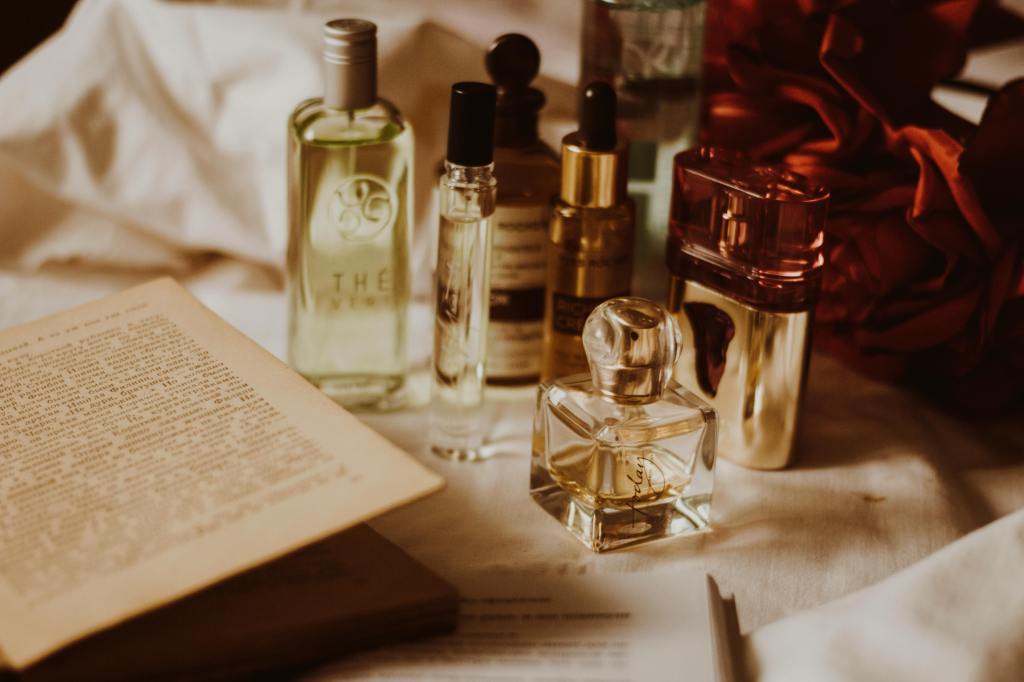
We all love fragrances and smelling good, but could the use of fragranced products in our skin be harmful for our health ?
We are surrounded by fragrances, they are in shampoos, shower gels, skincare products, and of course, perfumes.
So, what harmful compounds can eau de parfum contain and what ingredients should we look out for ?
A feeling of discomfort may be felt, due to the presence of one or more of the following ingredients.[1]
Phthalates including DEP, Diethyl Phthalate
Phthalates are colorless, slightly volatile liquid substances. Originally, these ingredients were used as plasticizers in plastic materials, particularly polyvinyl chloride (PVC), to make them more flexible. In cosmetics, they were mainly used for their fixing and film-forming properties. However, recognized as endocrine disruptors.
An endocrine disruptor is a substance or mixture of substances, which alters the functions of the endocrine system and thereby induces harmful effects in an intact organism, in its offspring or within (sub)populations » (Definition of the Organization World Health Forum of 2012 and endorsed by the European Commission). Their effects on human health are complex and still poorly understood, but more and more scientific data suggests that they alter numerous functions of the hormonal system, called the endocrine system: reproductive, thyroid, metabolic, adrenal functions, etc. In addition, data show that the “1000 days” period, which extends from prenatal development to early childhood, is particularly vulnerable to the effects of endocrine disruptors and must be a priority subject of attention.[2]
Most of them were banned from cosmetic formulas by the European Union in 2013, but this is not the case in other countries like the U.S. Only dimethyl phthalate (DEP) remains authorized: this ingredient is multifunctional (solvent, perfuming agent, film former, hair conditioner). In eau de parfum, DEP is used to fix and prolong scents. However, it remains an endocrine disruptor suspected by ANSES (French National Agency for Food Safety).
BHT and BHA
Butylated hydroxyanisole (BHA) and its associated compound butylated hydroxytoluene (BHT) are phenolic species with antioxidant properties. They protect the unsaturated fatty substances in eau de parfum from oxidation phenomena that can occur in contact with air. They thus increase the conservation periods of eau de parfum. Studies on these assets are still ongoing. However, some have already revealed that when applied to the skin, BHA and BHT are sensitizing, and can cause allergic reactions. Furthermore, it can also cause a modification of the hormonal system, resulting in a stimulation of estrogen, the sex hormone, and an inhibition of the expression of male sex hormones. This disruption would lead to deleterious effects on reproduction.
Azo dyes
Potential allergens, potential skin and eye irritants and suspected carcinogens (aromatic amine releasers), it is better to avoid these elements in an eau de parfum! They are listed under the following names: CI 1914 (yellow dye), CI 15850 (red dye), CI 15985 (yellow dye), CI 17200 (red dye), CI 16035 (red dye), CI 15880 (red dye), CI 12085 (red dye), CI 16255 (red dye), CI 15510 (orange dye), CI 11680 (yellow dye), CI 16185 (red dye), CI 12490 (red dye), CI 18050 (red dye), CI 18965 (yellow dye), CI 13015 (yellow dye), CI 20470 (black dye), CI 12700 (yellow dye), CI 15865 (red dye), CI 11710 (yellow dye), CI 21108 (yellow dye), CI 21100 (yellow dye), CI 12370 (red dye), CI 14700 (red dye), CI 14720 (red dye).
Chemical sunscreens
The latter are used in eau de parfum to protect them from damage due to the sun’s UV rays. Thus, it is possible to find controversial ingredients such as avobenzone (also called Parsol 1789, Eusolex 9020 or Escalol 517), octocrylene, oxybenzone (benzophenone-3), PABA (para-amonibenzoic acid) or 4-methylbenzylidene camphor (4-MBC).
So, what could we do to reduce the risk on our health ?
- Check the safety of ingredients in the products you buy.
- Go easy when you apply your perfume.
- Ditch scented lotions, deodorants, shampoos and aftershaves. This will lower your exposure to unwanted substances.
- Apply your perfume on your clothes, rather than directly to your skin.
[1] Source : typology.com
[2] Source : santepubliquefrance.fr
Photo by NastyaSensei from Pexels: https://www.pexels.com/photo/bottles-of-perfumes-over-a-table-954405/

 BOULEVARD